

At a glance
Key points for your project
- Price and approve the complete bill of materials, including small accessories.
- Identify the actual light model, mouthpiece and power configuration together.
- Keep physical assembly approval separate from performance claims and document review.
1. Start with a bill of materials
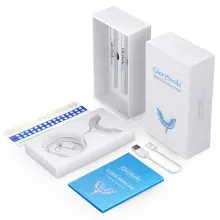
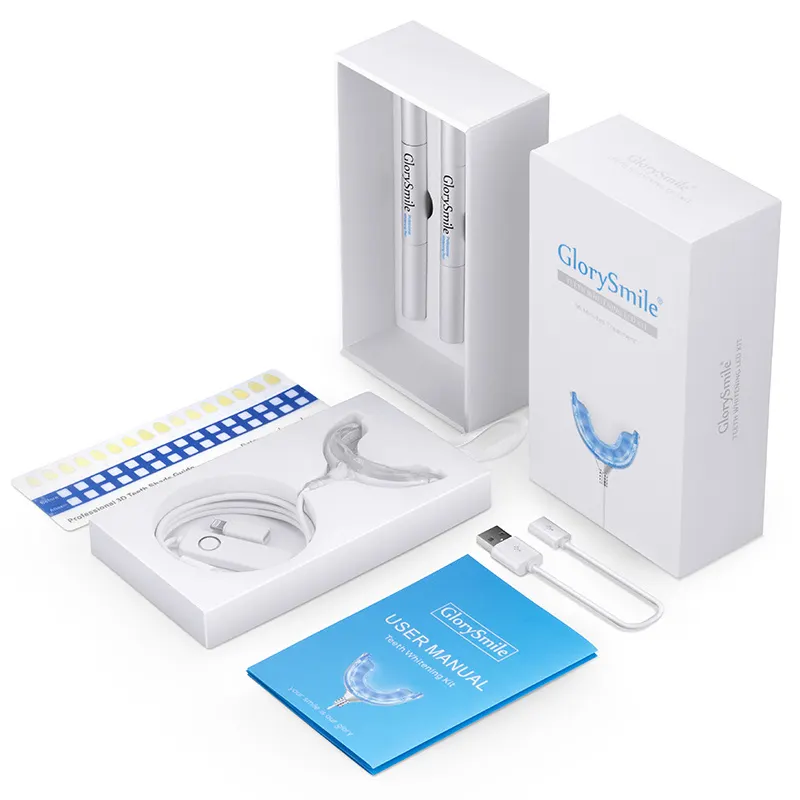
List the light or controller, mouthpiece, gel containers or applicators, cable, adapter if included, storage case, shade guide, instructions, tray or insert and retail box. Give each item a reference and quantity. Mark optional items separately so the quoted base kit is clear.
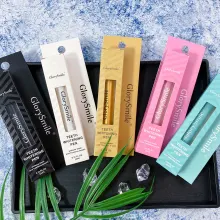
Ask whether the product photograph represents the quoted contents. A pictured accessory may be optional, and a sample may use an unbranded box. Record these differences rather than treating a catalog image as the final packing specification. The home whitening kit collection can help you shortlist a configuration before preparing the detailed list.
2. Identify the light and its power arrangement
Request the model reference and current technical specification for the proposed light. Record whether power comes from a cable connection, replaceable batteries or a rechargeable system, as applicable. Ask which cable, connector and power accessory are supplied and what input requirements apply to that exact model.
A connector name or charging symbol is not a complete compatibility statement. Have the supplier confirm the intended combination and provide the matching instructions and relevant test records. If an adapter is excluded, establish how that will be explained in the product information. Do not substitute another power component during sample review without confirming the configuration.
3. Check mouthpiece and accessory compatibility
Ask how the mouthpiece attaches, which model it belongs to and which materials contact the user. Identify removable components and the proposed cleaning and storage instructions. Record the supplier’s assembly and fit checks for the selected configuration.
Inspect the sample for missing parts, inconsistent references, obvious fit issues and unclear assembly information. Follow the supplied directions; do not use a dry assembly review to infer product effectiveness or safety. Ask which compatibility and quality checks have been performed on the assembled kit, rather than relying only on separate component specifications.
4. Specify consumables independently
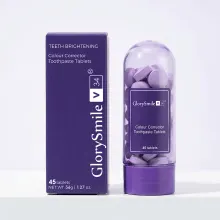
For each supplied gel or refill, record the formula reference, fill quantity, container, closure and number of units. Request the intended directions, warnings, storage information and supporting records for your market. Confirm whether the consumables shown in the image are the ones included in the quoted kit.
Ask what evidence supports using those consumables with the selected system. Do not copy a treatment time or performance statement from another kit. If your range includes refills, identify the exact replacement product and how buyers will recognize it. A refill plan should retain the same version control as the initial kit.
5. Compare complete kits with one worksheet
Use a line-by-line list to keep alternative quotations comparable. Blank fields should remain questions until the supplier confirms them.
| Component | Specify and confirm |
|---|---|
| Light or controller | Model, supplied specification, controls and relevant records. |
| Mouthpiece | Reference, connection, material information and included quantity. |
| Power items | Cable, connector, input requirements and any included adapter or battery. |
| Consumables | Formula reference, fill quantity, container and units per kit. |
| Accessories | Case, shade guide or other items, each identified and counted. |
| Information | Instructions, language, label text and model identification. |
| Packaging | Insert, retail box, outer carton and approved artwork version. |
6. Match documents to the supplied configuration
Ask the supplier to identify the company, site, model and product scope on each proposed certificate or test report. Check the dates, referenced attachments and whether the record concerns the light, consumable, packaging or another item. One document should not be assumed to cover every part of a kit.
Tell the supplier your destination country and sales channel early. For a US and European launch, identify the US, relevant EU member states and the UK separately where applicable. Agree who will assess the required documentation for the actual product and claims. Keep any unresolved model or document mismatch visible before finalizing artwork. The OEM manufacturer selection guide provides a broader document review framework.
7. Approve one fully packed reference sample
Request a sample assembled and packed in the proposed retail arrangement. Count the contents against the bill of materials, review the insert and cable placement, and check that model information and instructions agree. Record which details remain provisional, such as printed artwork or an accessory that will change.
Keep an approved sample reference and written version list. Ask how the supplier handles substitutions or changes after approval. If the light, consumable, connector or packaging changes, determine which parts of the review must be repeated before accepting the revised version.
8. Clarify the quotation and future supply
Ask for pricing per complete retail kit and separate costs for development, tooling, decoration, testing and shipping where relevant. Confirm the MOQ basis for the kit and for replacement consumables, including whether accessory colors or printed boxes create separate variants.
For ongoing supply, ask how model changes, spare components and repeat-order specifications will be communicated. Send the supplier your component list, target market, expected quantity and launch window together. A clear configuration gives both teams a stable reference for samples, quotation revisions and production planning.
Your project checklist
- Every included and optional component is listed and counted.
- Light, mouthpiece and power references identify the intended combination.
- Consumables have their own formula, fill and instruction records.
- Relevant documents are matched to the specific model or component.
- A fully packed reference sample and change process are agreed.
Buyer questions
Should a USB cable be treated as a complete power specification?
No. Record the exact connector, model input requirements and supplied power accessories, then ask the supplier to confirm the intended compatible configuration.
Can one certificate be used for the whole kit?
Review what the document actually names and covers. Ask which records apply to the light, consumables and other components, and have the required documentation assessed for your destination market.
Why request a fully packed sample rather than separate parts?
A packed sample allows you to compare the component count, assembly, instructions and retail arrangement against one bill of materials, while recording any provisional details.
Your next step
Plan a kit that is clear down to the last component.
Send your component list, preferred format and target market. We can discuss the configuration, packaging and sample details together.
Start your inquiry