At a glance
Key points for your project
- Compare the proposed development scope, rather than relying on the OEM or ODM label.
- Agree who controls formulas, artwork, tooling and access to production files.
- Choose an existing or custom route against your actual budget, differentiation and launch requirements.
1. Translate the terminology into a scope of work
For a first discussion, use three working descriptions. A private label proposal may start with an existing product and add your brand. An ODM proposal may start with a supplier-developed design that you adapt. An OEM proposal may focus on manufacturing to an agreed specification. These descriptions are a starting framework; ask each supplier what its proposal includes.
Give the conversation a concrete test: “If we choose this toothpaste, which parts are already defined, and which parts will you develop for us?” Record the answers for formula, flavor, container, artwork and outer packaging separately.
2. Decide where your product needs to be different
List the differences that matter to your intended buyer. These could include a particular format, pack size, flavor profile, applicator, kit contents or retail presentation. Rank them as essential, desirable or undecided. Avoid paying for development that does not serve your product plan.
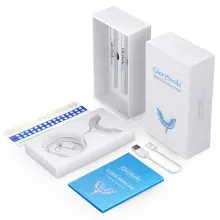
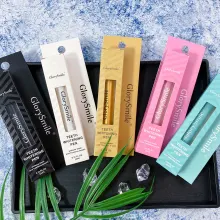
For example, one brand may want an existing strip format with its own pouch and box artwork. Another may require a different strip shape and a new pack configuration. Treat those as separate scopes even if both suppliers call the offer private label. Explore the available oral care formats before setting the final brief.
For a US or European launch, include the destination country and sales channel in that decision. Ask the supplier to identify the proposed product and packaging for that brief, rather than treating a general export offer as a finished specification.
3. Build a responsibility matrix before requesting a price
Complete this table with the supplier. For each item, add who prepares it, who approves it, the agreed output and any separately quoted charge.
| Project item | Question to resolve |
|---|---|
| Formula | Existing reference, adjusted version or new development? Who specifies and approves it? |
| Product design | Which dimensions, components or functions are fixed, and which can change? |
| Packaging | Who supplies the container, dieline, artwork and final production files? |
| Tooling | Is new tooling needed? Who pays, controls access and maintains it? |
| Evidence | Who arranges the agreed evaluations and supplies the product records? |
| Approval | Who signs off each version before purchasing and production proceed? |
4. Discuss ownership and access as separate questions
Ask what you will receive when development ends. Possibilities to clarify include artwork source files, a finished packaging file, a product specification, an ingredient list or access to a formula reference. Do not assume that paying a development fee gives you every underlying file or an exclusive formula.
Put any proposed exclusivity, reuse restrictions, tooling arrangements and file handover in the written agreement. Where these rights are important to the business, have the agreement reviewed before committing funds. Also discuss what happens if you change packaging vendors or move a future order. This is a list of questions to settle, rather than a statement that any particular rights automatically apply.
5. Compare development work with the launch plan
Request a plan for the actual scope: product selection, development, sample rounds, artwork, any agreed evaluations, component purchasing and bulk production. Ask which steps depend on your approval and which can run together. Compare routes using those tasks, not an assumed promise that one label always means a faster launch.
Separate one-time work from the recurring unit cost. Ask whether a change to formula, container or print finish creates a new sample requirement, minimum quantity or setup charge. The MOQ and quotation guide provides a worksheet for comparing those costs.
6. Include the second order in the first decision
Before choosing a development route, describe a realistic reorder: same product, a new flavor, a seasonal box or a refill. Ask which references remain the same and which changes require another approval. Record how product and artwork versions will appear on future quotations.
Discuss component availability and how substitutions will be proposed. Ask what information or retained samples will be used to review a repeat order. A product that fits the initial launch should also have a clear process for changes, rather than leaving every reorder dependent on an old email thread.
7. Turn the discussion into a route decision
Write a short decision note: the existing product or design you will use, the changes you need, the responsibilities you accept and the items the supplier will deliver. List unresolved questions next to the person who must answer them. That note becomes the basis for a meaningful quotation and sample request.
If you are still deciding, request two clearly defined options, such as an existing format with branded packaging and a more customized version. Ask the supplier to show the differences in scope, approvals and commercial terms. Use the broader manufacturer selection guide once the proposed route is clear.
Your project checklist
- Each customization item is described independently of the OEM, ODM or private label terminology.
- The formula and product references are identified.
- Artwork, files, tooling and proposed exclusivity arrangements are documented.
- One-time development work and recurring order costs are separated.
- The approval and reorder process has a named owner.
Buyer questions
Does private label always mean changing only the logo?
Ask what the specific offer allows. A supplier may offer additional changes, but formula, pack size, flavor or packaging changes need their own scope, quotation and approval.
Does paying for a sample mean I own the formula?
Do not assume this. Ask what rights and files the proposal includes, and record the agreement before paying for development.
Can I start with an existing format and customize later?
Discuss that as a phased project. Confirm which later changes would require new samples, artwork, components, minimum quantities or development charges.
Your next step
Choose the scope before the label.
Tell us which product you want to launch, what must be different and what is already decided. We can discuss the development work and sample configuration.
Start your inquiry